The federal government has agreed to demands by the Greens to ban self-managed super funds from borrowing to purchase residential properties and avoid the capital gains tax increase. Labor will also postpone by two months the passage of the legislation to reform the NDIS. In return, the Greens will support the ALP’s capital gains tax and negative gearing changes in the Senate in their entirety.
Since 2011, self-managed funds have had an exemption allowing them to borrow to purchase housing. The SMSF sector will still be able to invest in housing using their own funds, but they won’t be able to borrow.
An inquiry into the federal government's proposed overhaul of the National Disability Insurance Scheme has been extended by eight weeks with a new reporting date of August 14. It means that legislation, which is expected to reduce the cost of the NDIS by almost $10 billion each year, will be delayed.
PM Anthony Albanese said the reforms will make it easier for Australians to buy their first home, cut taxes for over 13 million workers, and better align the tax treatment of labour and asset income.
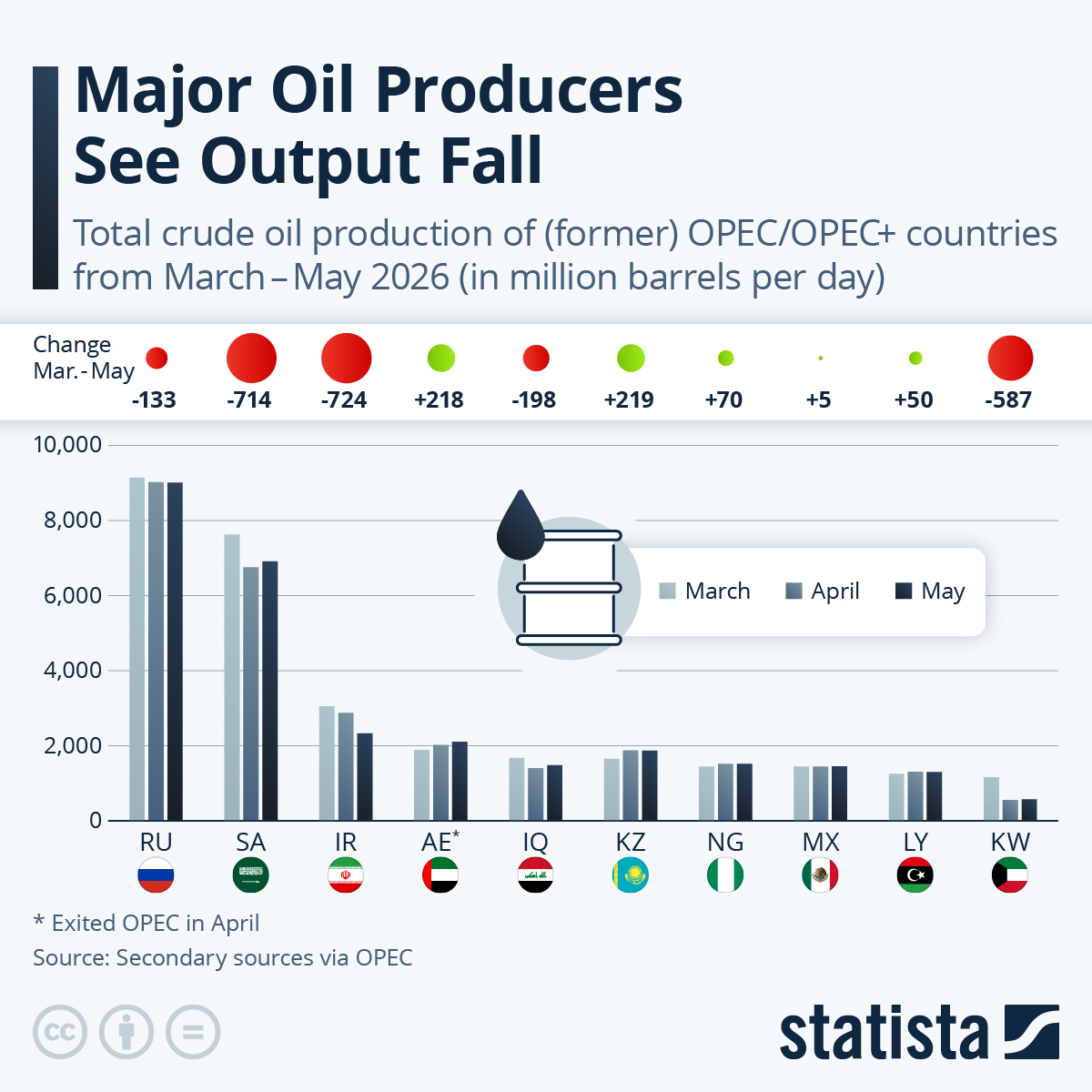
The oil might be flowing again now (especially from Iran, after sanctions were lifted), but the closure of the Strait of Hormuz saw many OPEC+ members significantly reduce their oil production.
Fear & Greed Q+A today
On the number of Australians investing in SpaceX, the appetite for US tech stocks, and the surprising popularity of UK companies:
“If we look outside of the United States, the UK actually pops up quite a bit.
Maybe a bit surprising, but it's some of those UK-listed industrial stocks and mining companies. So, for example, stocks like Pensana, which produces rare earths and is focused on magnet metals used in defence equipment.
Glencore is another one, one of the world's largest commodity companies. Endeavour Mining makes the list as well, one of the world's largest gold miners. You've got Anglo American and Rolls-Royce, which amongst other things develops aircraft engines.
So they certainly make the list, but really it's those big US tech names that continue to dominate.”
We’re working with research agency Fonto to learn more about our community. We’re running a short survey to hear from you – what you love about Fear & Greed, what we could improve on, and more. It only takes a few minutes, and just by taking part, you can enter the draw to win a $3,000 Luxury Escapes voucher. The survey is ending on June 30, so get in quick!
News in brief
The price of iron ore has fallen to its lowest level since the start of March as demand from China weakens at the same time global supply is increasing, with the Simandou mine in Guinea ramping up production. That’s bad news for Australia’s big three miners – BHP, Rio Tinto and Fortescue Metals Group.
KPMG’s chairman Martin Sheppard and two senior partners will quit the firm, becoming the latest leaders to resign over the consultancy’s handling of whistleblower allegations that it misused confidential client information.
WiseTech Global says its executive chairman Richard White has assured the board he was not aware of a police investigation into allegations he exploited a woman’s immigration status and financial insecurity for sex, with the billionaire denying involvement in human trafficking.
Iran has denied a claim by Vice-President JD Vance that it will allow nuclear inspectors back into the country, after the first round of talks between Washington and Tehran to reach a final deal to end the war.
SpaceX has only been listed ten days, but in a case of irrational exuberance, its share price has surged and then tumbled. Yesterday, SpaceX was down 16.4 per cent. It was issued at $US135 a share, rose to a high of more than $US225, and has fallen back to $155 a share.
Fear-o-meter
Like it or not, Australia is about to get a new capital gains tax regime. The Howard government-era 50 per cent CGT discount for all investments will be abolished, as will negative gearing.
The CGT discount will be replaced with a less generous version of the Hawke government’s model that taxed real gains, taking into account inflation over the life of the asset. The Albanese-Chalmers model includes a 30 per cent minimum CGT rate.
Changes introduced last week lifts from $2 million to $10 million the turnover threshold under which a business would be eligible for an extra 50 per cent CGT discount on top of the inflation-indexed deduction. There are also more generous provisions for small businesses considered “innovative”.
This is a decent reform, and the government has got it done two years before the next election is due. Next cab off the rank is the NDIS, traditionally more heartland to Labor supporters. It is much bigger in financial and emotional terms. It will be harder for the government to push it through.
Forwarded from a friend? Sign up to our daily newsletter